Search
Close this search box.
Search
Close this search box.

Optical Non-Contact Measurement

High-precision, high-speed metrology without physical interference.

What is Optical Non-Contact Measurement?

Optical non-contact measurement uses precision optics, cameras and lighting to inspect components without touching the surface.

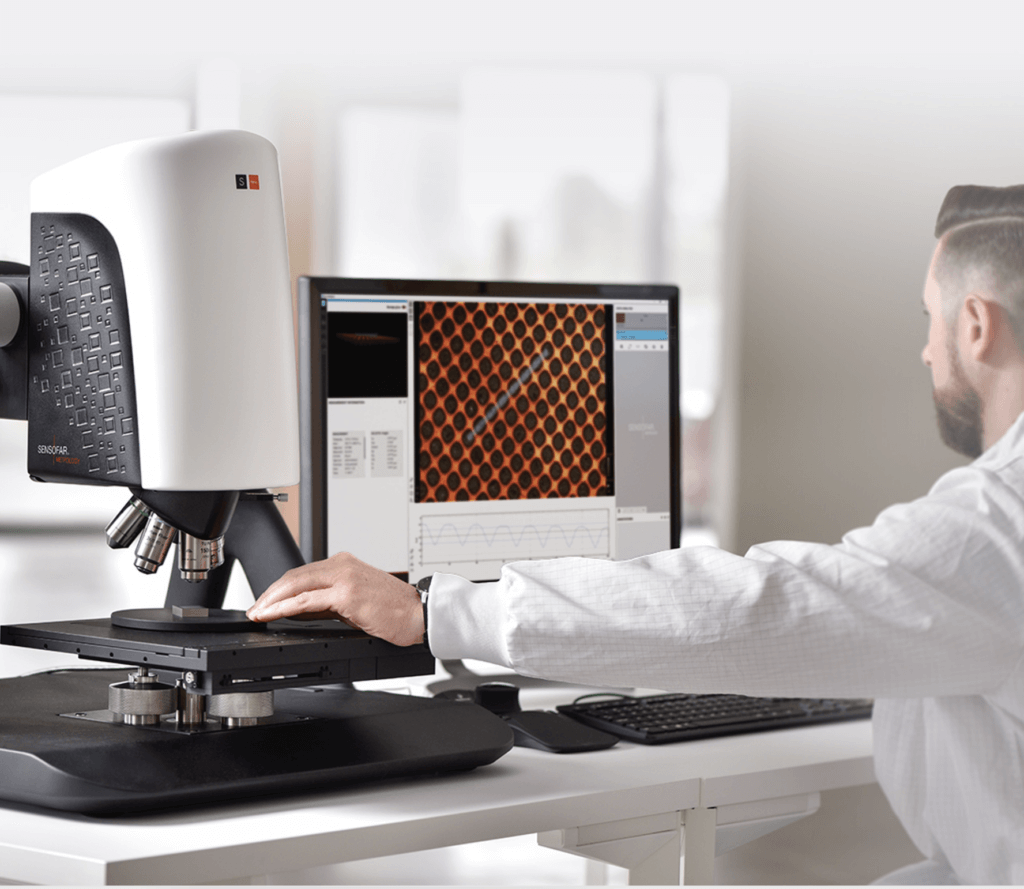
Systems like Micro-Vu Excel, Jenoptik Opticline, and Sensofar S Neox offer fast and repeatable inspections, making them ideal for delicate or complex parts.

Whether you need inspection services or a non-contact measuring machine, our solutions provide accurate, traceable results while protecting your components.

Benefits of Optical Non-Contact Measurement Systems

Non-contact accuracy: Measure fragile or polished parts without risking marks or scratches.

Fast data collection: Capture results in seconds, helping you improve throughput.

Flexible applications: Suitable for aerospace, automotive, electronics, and medical devices.

Trusted systems: Micro-Vu, Jenoptik, Sensofar, Novacam and RX Solutions provide optical inspection technolgy.

Reporting & compliance: Export data for SPC, audits, and full traceability.

How Optical Non-Contact Measurement Works


Optical non-contact measurement systems use advanced imaging, light, and laser technologies to capture precise dimensional and surface data – without physically touching the part.

This approach eliminates the risk of surface damage and allows for rapid, repeatable, and highly accurate inspection of complex geometries.

Systems such as Micro-Vu, Jenoptik, Sensofar, Novacam, and RX Solutions use techniques including optical scanning, interferometry, focus variation, and computed tomography (CT) to generate detailed 2D and 3D representations.

These measurements provide valuable insights for quality control, product validation, and process optimisation across a wide range of materials and industries. 

Product Range

Robust, shop floor optical shaft metrology at its simplest, fastest and most accurate.

Affordable, high accuracy, fast measurement. Illumination for measurement of otherwise hard-to-measure shiny parts simple, optional UKAS calibration.

Measuring surface roughness is vital when manufacturing orthopaedic implants – texture ensures that the implant successfully attaches to the bone. 3 in 1 sensor head measures textures and structures across varying surface scalesOptimised for flexibility and is suitable for both research and development (R&D) and quality control (QC) in laboratories.

Full visibility of internal features or components of your parts with this 3D X-ray measurement and analysis system.

Fast, high precision 3D optical bore inspection with long rotating probes.

Instant non-contact 2D measurement of small shafts, with an option for measuring flat parts.

Optical bore inspection systems for
automated detection of surface defects

Certifications and Accreditations

Ready to Improve Your Inspection Process?

Talk to our experts about how Micro-Vu, Jenoptik, Sensofar, Novacam and RX Solutions systems can simplify inspection and improve productivity.

We’ll help you select the ideal system for your specific application.

FAQs

Optical non-contact measurement uses light, typically through cameras, lasers, or interferometry, to capture precise dimensional, surface, or form data without physically touching the part. This allows highly accurate and repeatable inspection of components, especially those that are soft, delicate, or complex in geometry. At The Sempre Group, we integrate a wide range of optical technologies to suit everything from micro-scale surface topography to large part dimensional verification.

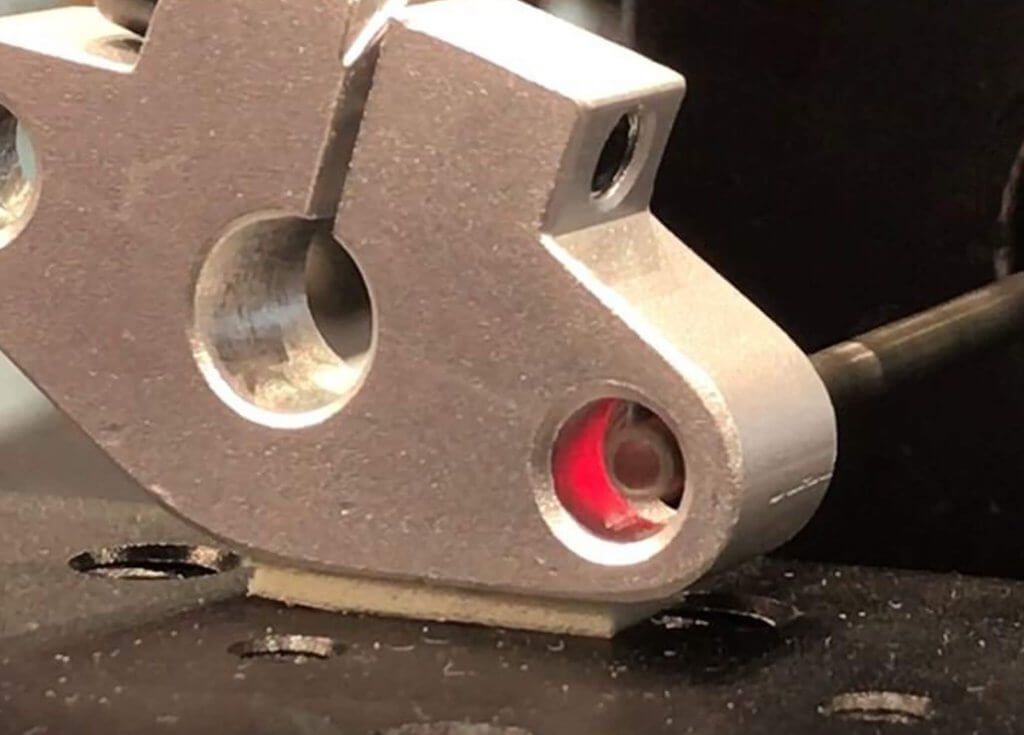
A vision system captures measurement data using light or image-based sensors, while tactile systems rely on a physical probe that contacts the part’s surface. The key difference besides not requiring to physically touch the part is speed and data density. Vision systems can measure thousands of points in seconds, delivering a complete picture of the part’s geometry, whereas tactile methods collect data point by point (not strictly true, most probing system nowadays are scanning touch probes so offer the same high-density scans). Vision-based systems are ideal when you need fast, repeatable, and non-destructive inspection.

Optical systems can offer faster measurement, higher throughput, and richer data sets. They eliminate probe wear and the risk of damaging sensitive components. Non-contact measurement also enables inspection of features that are difficult or impossible to reach with a tactile probe, such as microstructures, soft materials, and complex 3D forms. The result is improved productivity, traceability, and confidence in your quality data. Many non-contact systems allow for multiple sensing options on the same machine, such as vision, laser and touch probe, and can form a highly flexible solution.

The Sempre Group brings together world-leading metrology technologies with expert local support. Our team doesn’t just sell instruments; we deliver complete measurement solutions tailored to your process, your parts, and your business goals. With in-house applications specialists, UKAS-accredited calibration, and decades of experience in quality improvement, Sempre ensures you get the right system, correctly implemented, and fully supported.

By providing rapid, accurate, and objective data, optical measurement enables real-time process control and early detection of defects. This helps manufacturers reduce scrap, improve process capability, and maintain consistent quality standards. From first-article inspection to automated inline verification, optical systems allow continuous improvement and traceability throughout production.

Choosing the right measurement technology starts with understanding your application: the size, material, tolerance, and surface characteristics of your parts, as well as your throughput and automation requirements. Sempre works closely with customers to benchmark different systems and recommend the most suitable solution, whether that’s optical, tactile, or a hybrid approach. Our goal is to ensure you invest in a technology that delivers long-term value and confidence in your measurements.

Need Help With A Quality Challenge? Get In Touch.